
When you need web design inspiration, these are the places worth your time: curated galleries like siteInspire and Awwwards for finished sites, communities like Dribbble and Behance for concepts and visual direction, and specialist collections for landing pages, Webflow builds, and brutalist experiments. Here are the 11 we actually use at the studio, and what each one is best at.
One honest note first: this list originally had 12 entries. Commerce Cream, a lovely gallery of Shopify storefronts, has since gone offline, so we removed it rather than pad the list. If you need e-commerce inspiration specifically, ecomm.design now fills that gap well.
1. siteInspire: the cleanest curation on the web
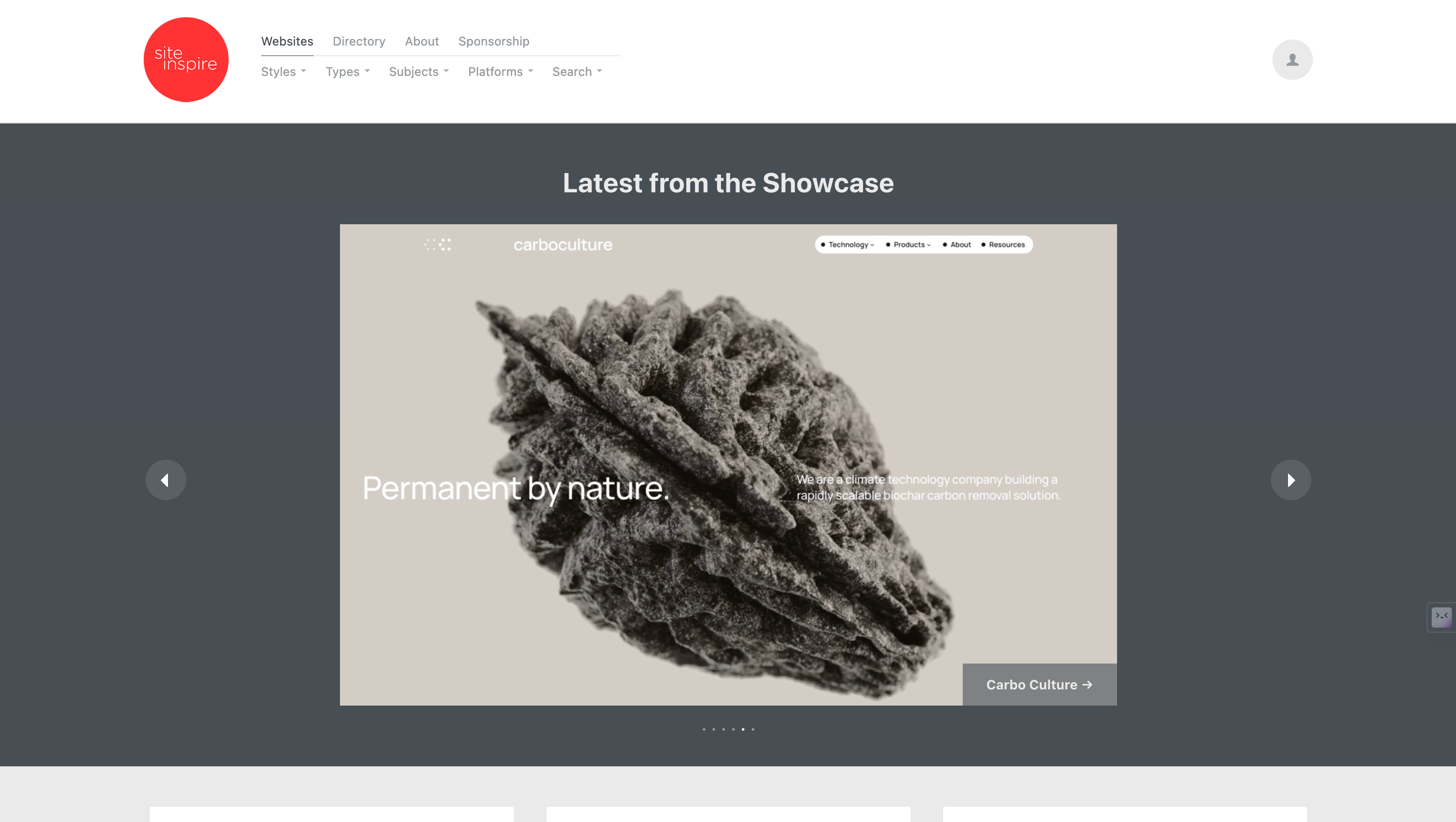
siteInspire is strictly curated, which is exactly its value. No concept shots, no mockups, only real, live websites, filterable by style, type, and subject.
- Filter by categories like E-commerce or Portfolio when you're hunting for something specific.
- Browse the themed Collections when you want a direction, not just a single reference.
2. Awwwards: where trends get set

Awwwards is the award show of the web design world. A jury of designers scores submissions daily, so what wins here often shapes what everyone else builds next year. Fair warning: it skews toward showpieces, so steal the craft, not necessarily the usability.
- The Site of the Day is a reliable daily dose of high-end work.
- Their conferences are worth watching if you want to hear the people behind the winning sites.
3. lapa.ninja: the landing page library
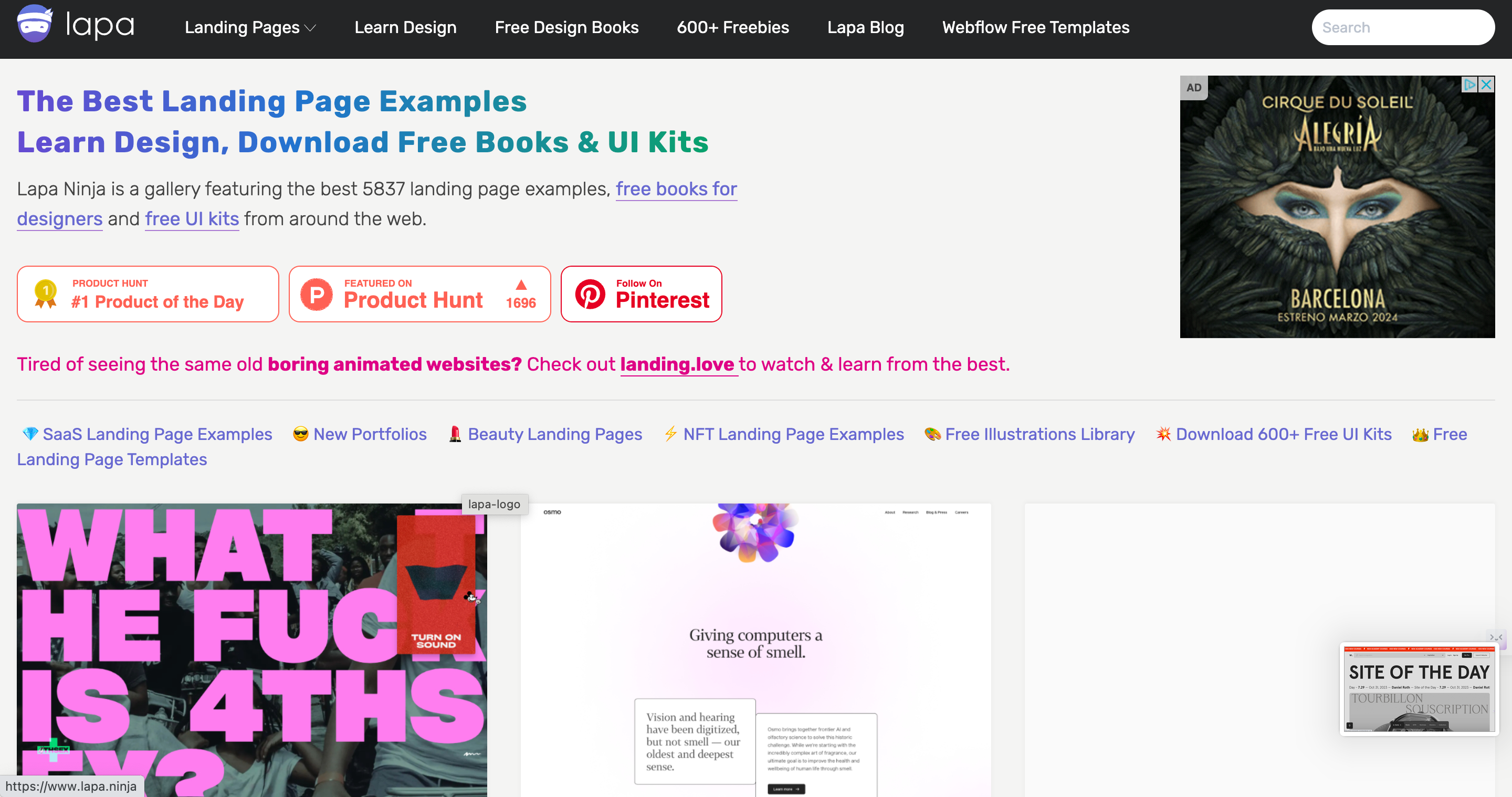
lapa.ninja focuses on landing pages, thousands of them, each saved as a full-page screenshot. That makes it perfect for studying structure: how pages open, order their sections, and close.
- Start with the landing page gallery filtered to your industry.
- The Top 100 is a fast shortlist when you're short on time.
4. CSS Nectar: daily picks with a long memory
CSS Nectar has been running its site-of-the-day format for over a decade, with thousands of entries sorted into categories from design agencies to portfolios. It's less flashy than Awwwards and often more practical.
- Browse the gallery by category to find work closer to real client constraints.
- You can submit your own site for review, which is a decent low-stakes visibility play.
5. Best Website Gallery: a designer's personal shelf
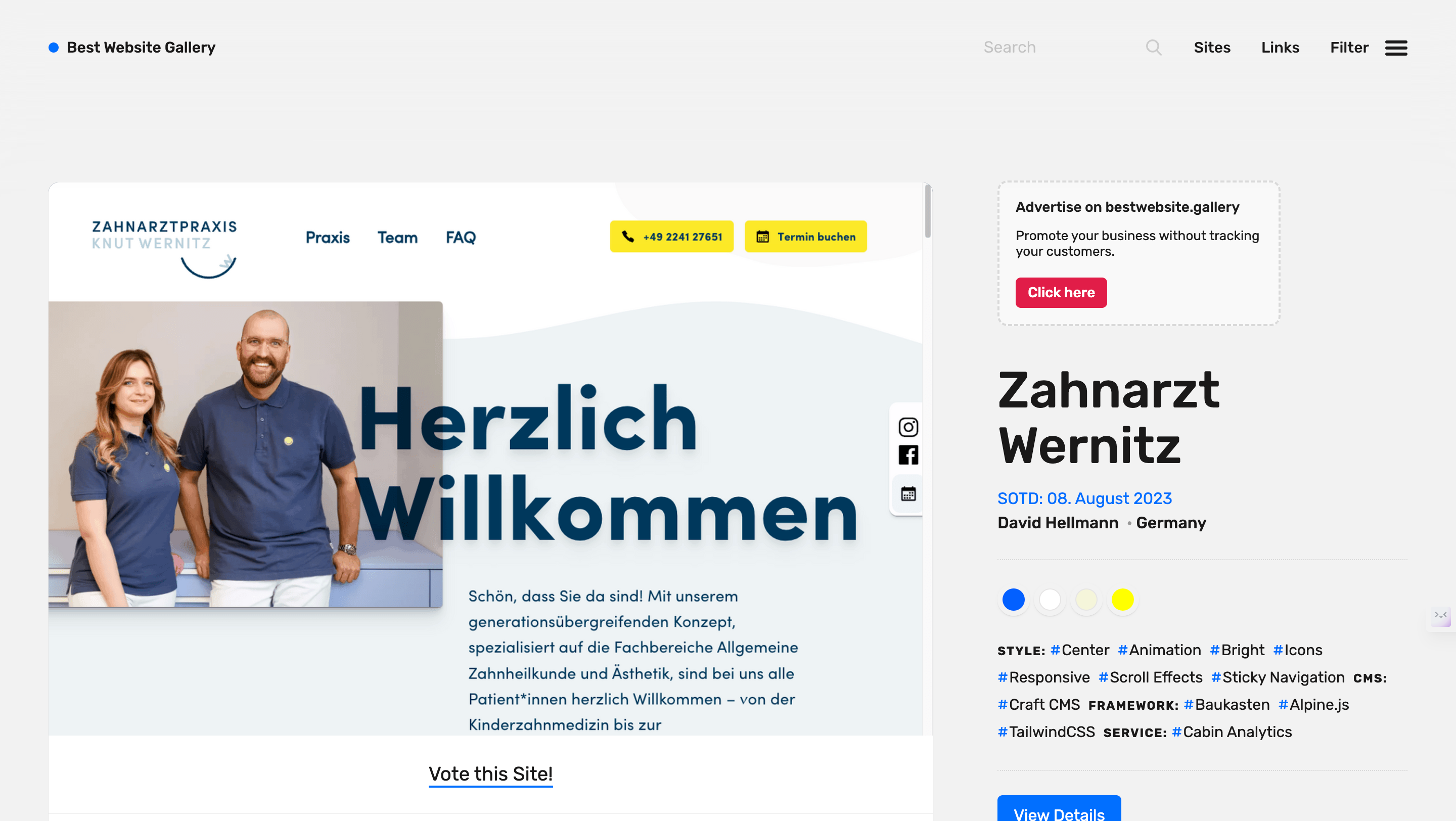
Best Website Gallery is a hand-picked collection rather than an open submission pool, and it shows. The taste level is consistent, and the tagging is unusually good.
- Dive into the gallery for the full stream.
- Use the tag filter to search by framework, style, or feature. Few galleries let you filter this precisely.
6. Behance: the global portfolio stage
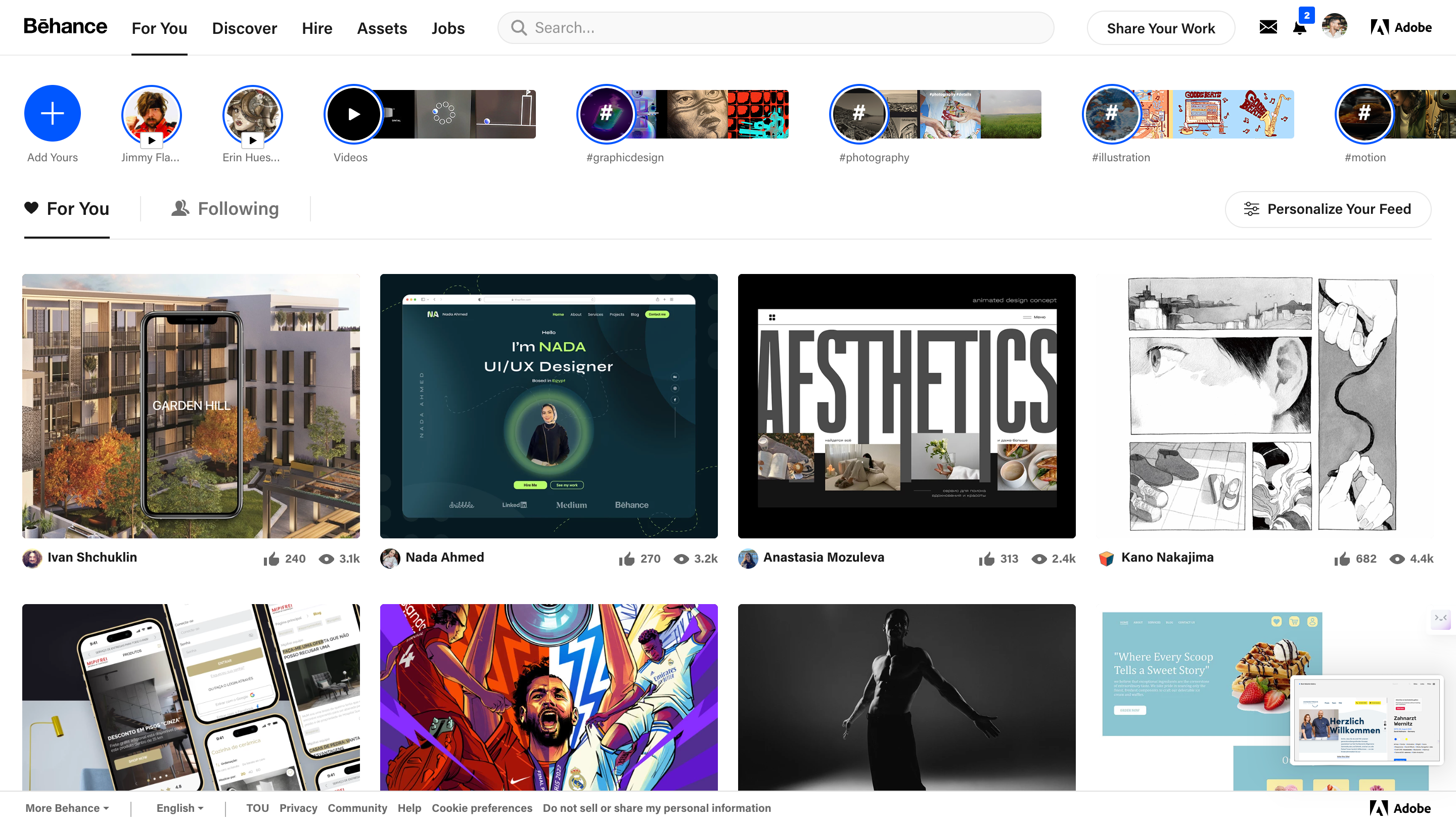
Adobe's Behance is where studios and freelancers publish full case studies, not just screenshots. That's its edge: you see the thinking, the process, and the variations that didn't ship.
- Search web design projects and sort by appreciation to surface the strongest work.
- Follow a handful of studios whose taste matches yours; your feed becomes a private gallery.
7. Designspiration: the mood board machine
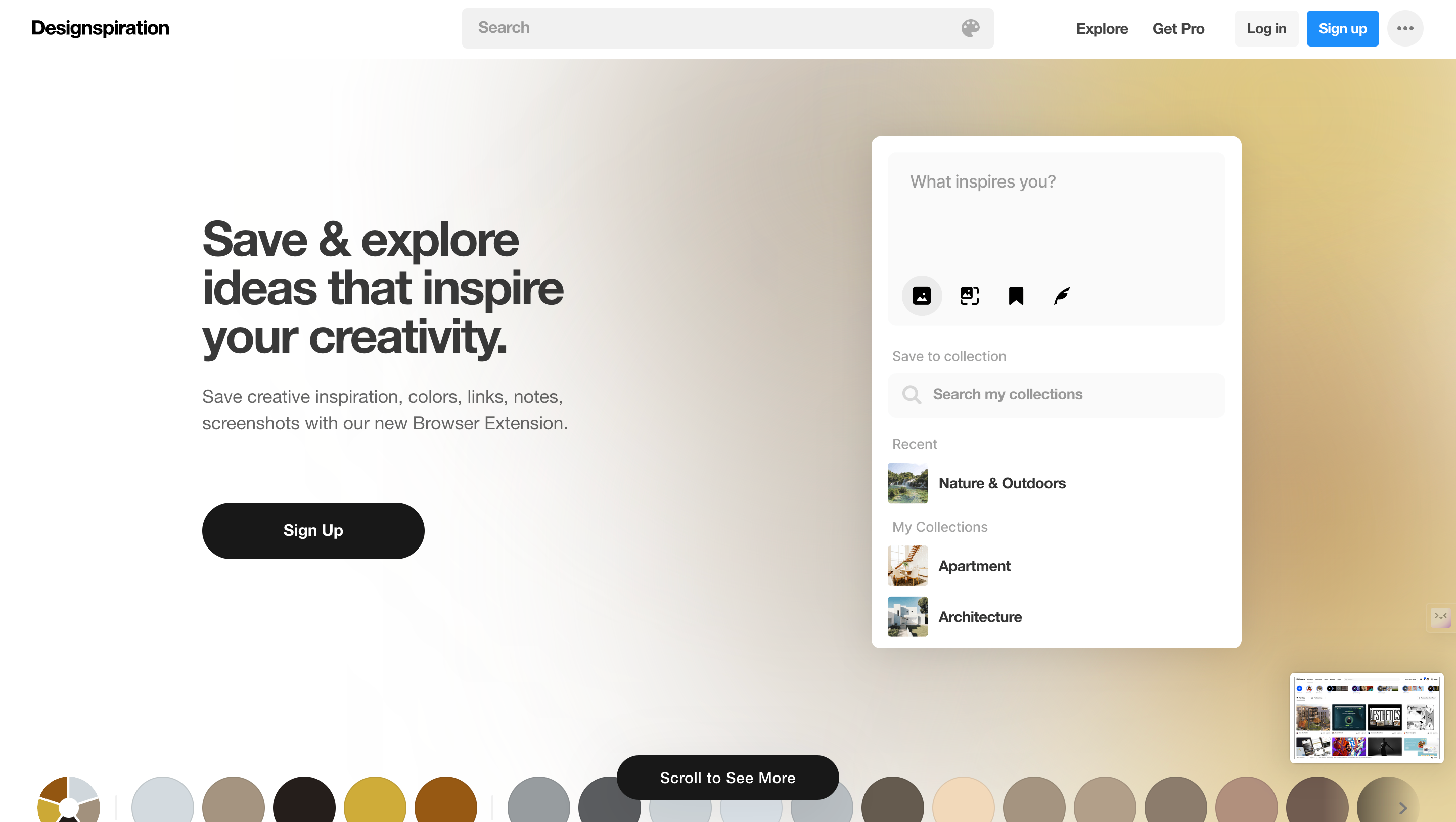
Designspiration works like a design-only Pinterest. It's broader than web design, which is exactly why it's useful: the best web ideas often come from print, packaging, and poster work.
- Its search by color lets you find references that match an exact palette, which is gold when you're working inside brand guidelines.
8. Dribbble: quick hits of visual direction
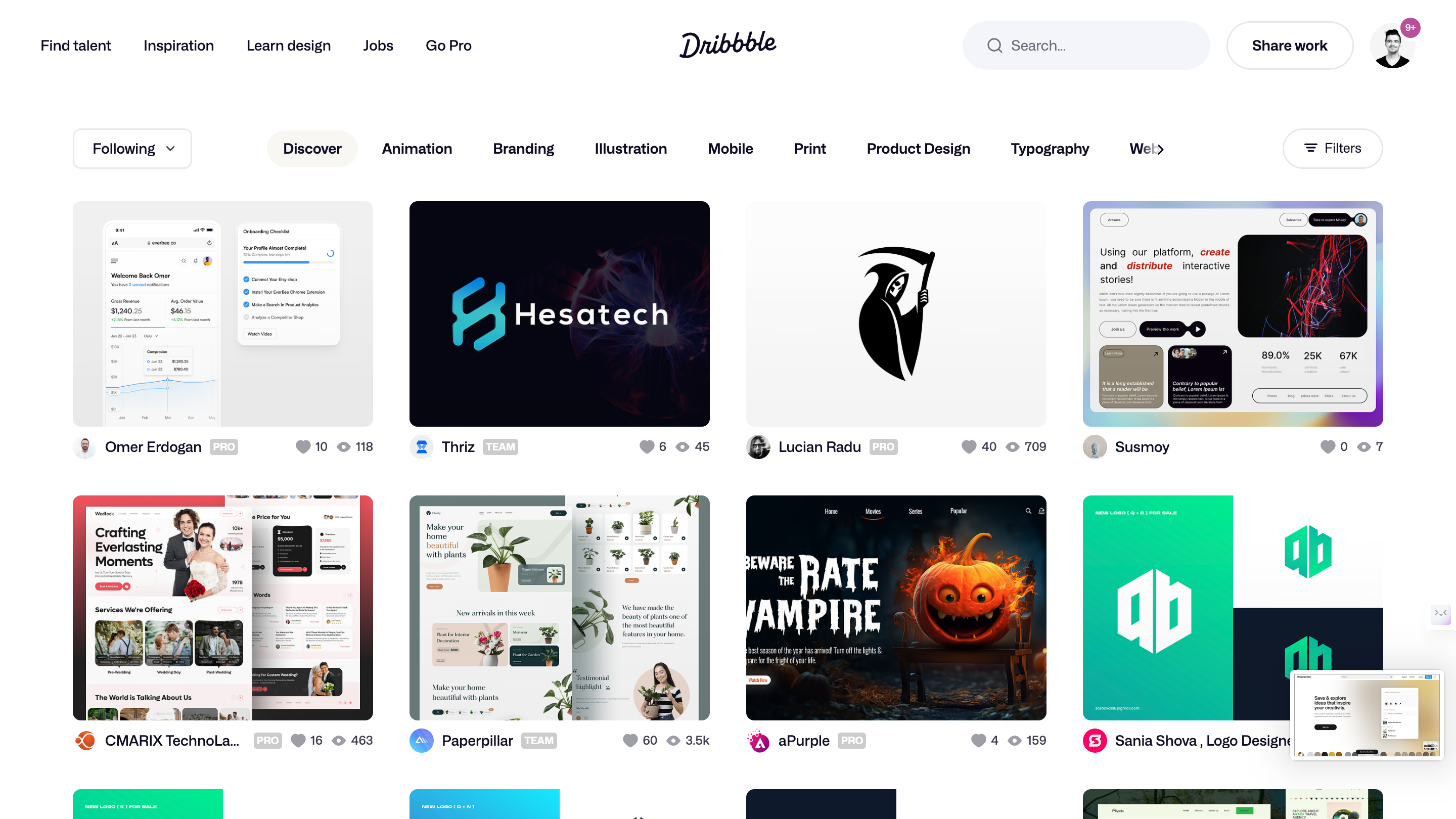
Dribbble is a community of designers sharing small shots of work: heroes, components, animations. Treat it as a styling reference, not a usability one; many shots are concepts that never had to survive real users.
- Scan popular web design shots when you need fast visual direction for a component or a hero section.
9. Made in Webflow: proof of what no-code can do
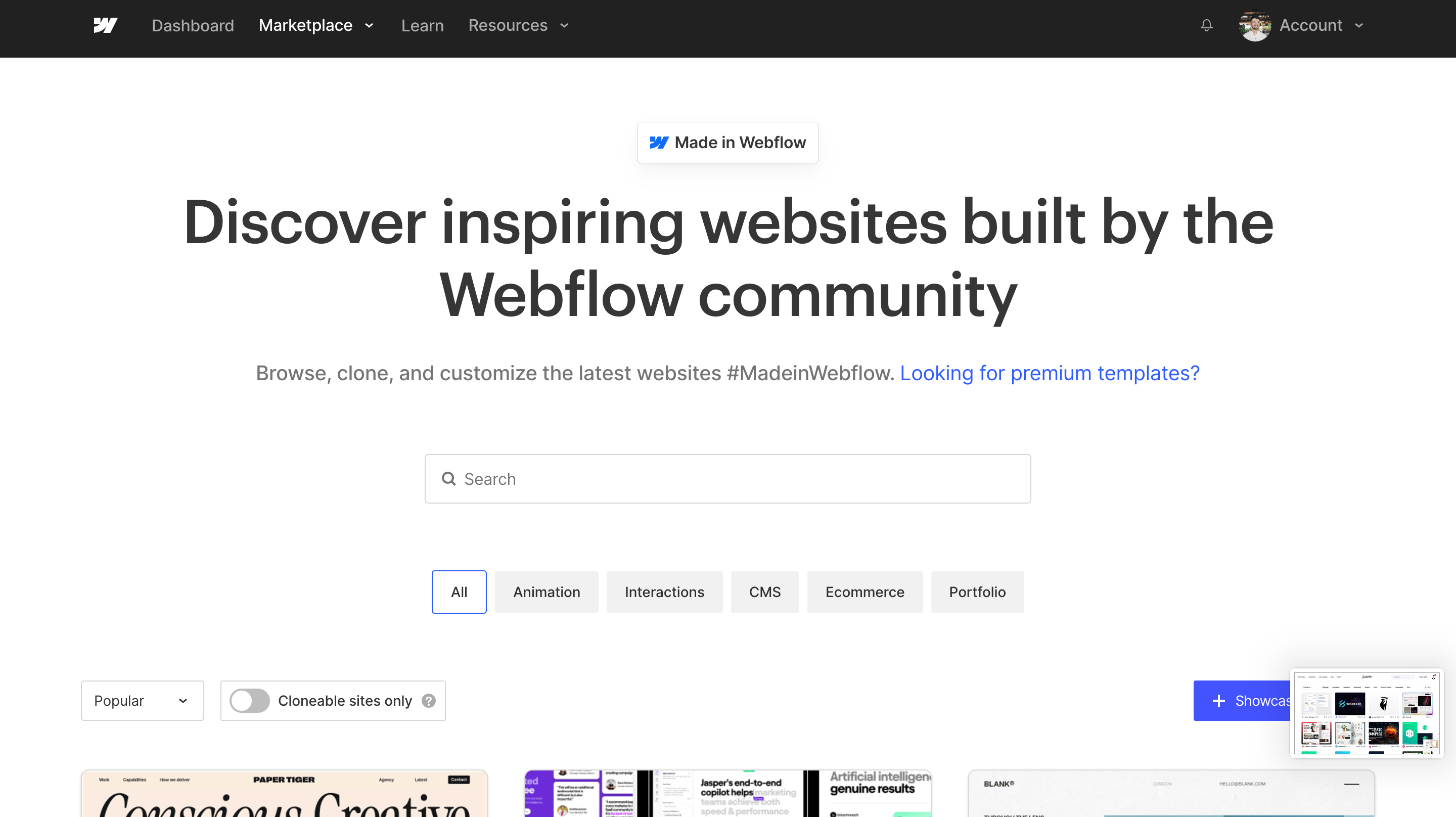
Webflow's community showcase, now called Made in Webflow, highlights real sites built on the platform. As a Webflow partner studio, we use it for a specific purpose: checking how an ambitious idea was actually implemented, since many projects are cloneable and you can inspect the build.
- Browse the showcase by category, and look for cloneable projects to learn from the inside.
10. Flowbase: templates and components, not just pictures
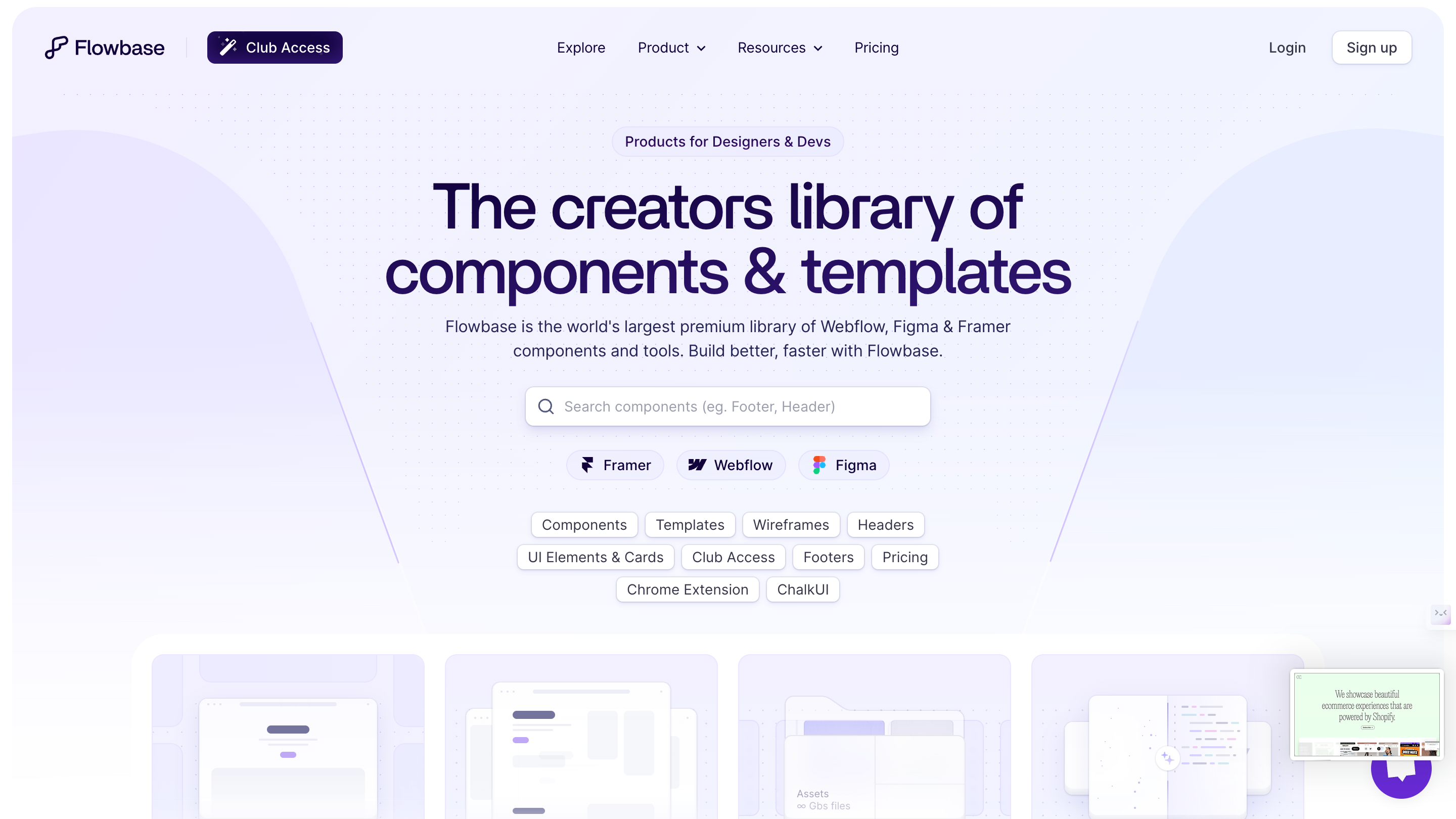
Flowbase is less a gallery and more a parts shop: Webflow templates, component libraries, and assets. When a deadline is tight, starting from a well-built component beats admiring someone else's.
- Their templates make honest starting points you can restyle into your brand.
11. Brutalist Websites: the rule-breakers' archive
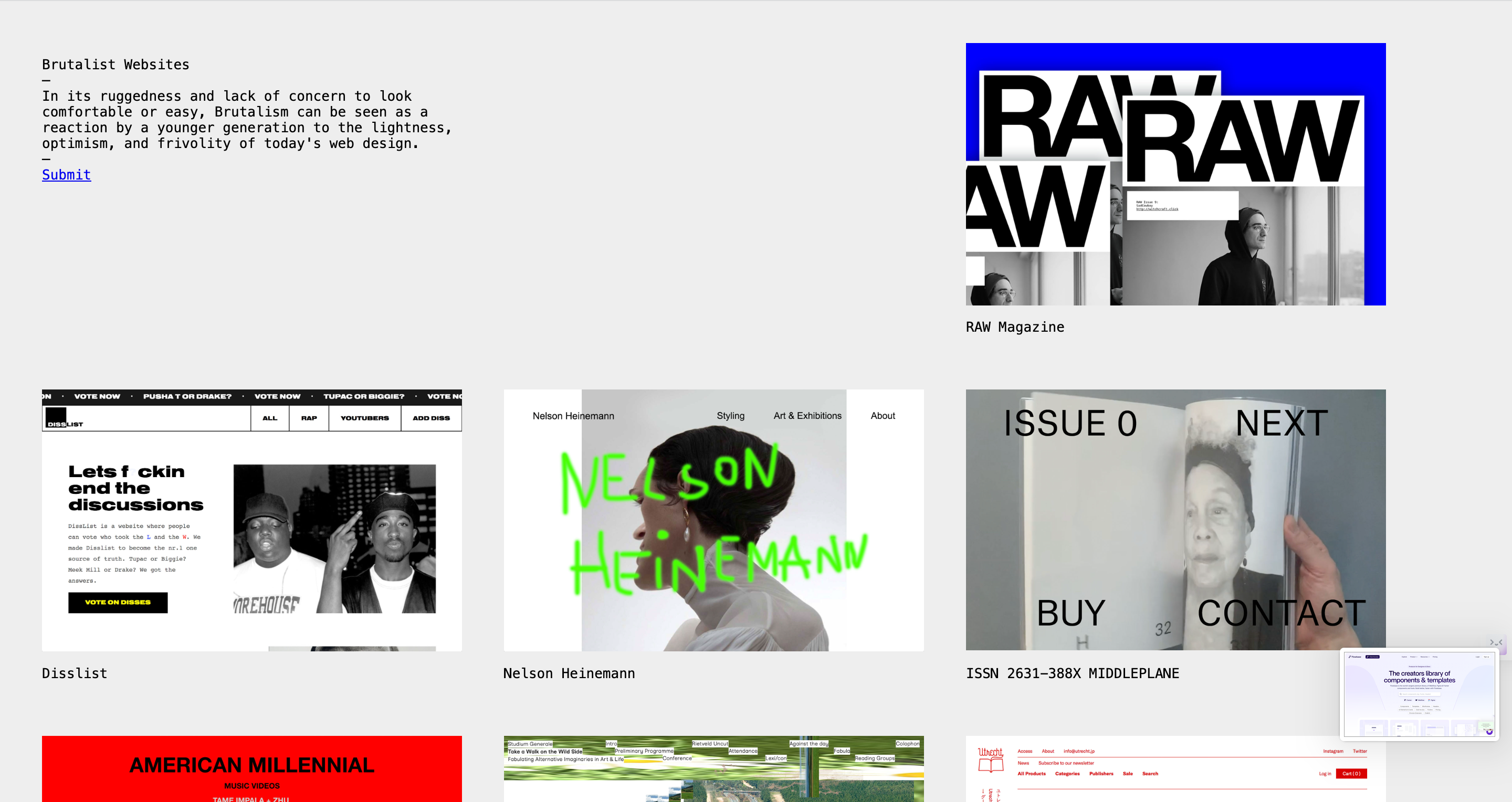
Brutalist Websites collects the raw, unpolished, deliberately rule-breaking side of the web. You probably won't ship a brutalist site for a B2B client, but ten minutes here resets your sense of what's allowed. We covered where brutalism fits among the bigger movements in our top 10 web design trends.
How to actually use inspiration sites
- Collect with a question. "Nice site" is useless; "how do they handle pricing tables" is a brief.
- Steal structure from galleries, styling from communities. Live-site galleries show what survives real users; Dribbble and Behance show what's visually possible.
- Limit the session. Thirty minutes of browsing with a folder of saves beats three hours of scrolling. Inspiration has diminishing returns, and deadlines don't.
FAQ
What is the best website for web design inspiration?
For finished, real-world websites, siteInspire and Awwwards are the strongest curations. For visual concepts and styling ideas, Dribbble and Behance. The right pick depends on whether you need structure or surface.
Is Dribbble good for web design inspiration?
Yes, for visual direction: color, type, and component styling. Just remember many shots are concepts, so validate any pattern against live sites before you build it.
Where can you find e-commerce design inspiration?
siteInspire's e-commerce category and ecomm.design are the best current sources. Commerce Cream, the old favorite for Shopify stores, is no longer online.