
Carrd is the cheapest serious website builder around: one-page sites, paid plans from $9 to $49 per year, and a Pro Standard tier at $19 a year that covers custom domains and forms. Below are five Carrd-built websites that show how far that simplicity can stretch, each one live and verified at the time of writing.
A confession first. This list started life as a top 10. When we went back to check every link, half the sites were gone: domains expired, pages unpublished, businesses moved on. Rather than pad the list with filler, we kept the five survivors. There's a lesson in that churn, and we'll get to it at the end.
Why designers keep recommending Carrd
Carrd does one thing: single-page websites. That constraint is the feature. The editor is clean, every template is responsive out of the box, and you can go from blank page to published site in an afternoon.
- Price: paid plans run roughly $9 to $49 per year. Not per month. Per year.
- Speed: one page means nothing to over-build. Pick a template, swap the content, publish.
- Enough power: the Pro Standard plan ($19 a year at the time of writing) adds custom domains, forms, and embeds, which covers most landing page needs.
For comparison, Webflow starts around $14 per month for a basic site plan and climbs from there, in exchange for CMS features, complex interactions, and multi-page structures Carrd simply doesn't do. We compared the two worlds in more depth in our full Carrd guide.
1. NewsletterOS: a product site that sells one thing well
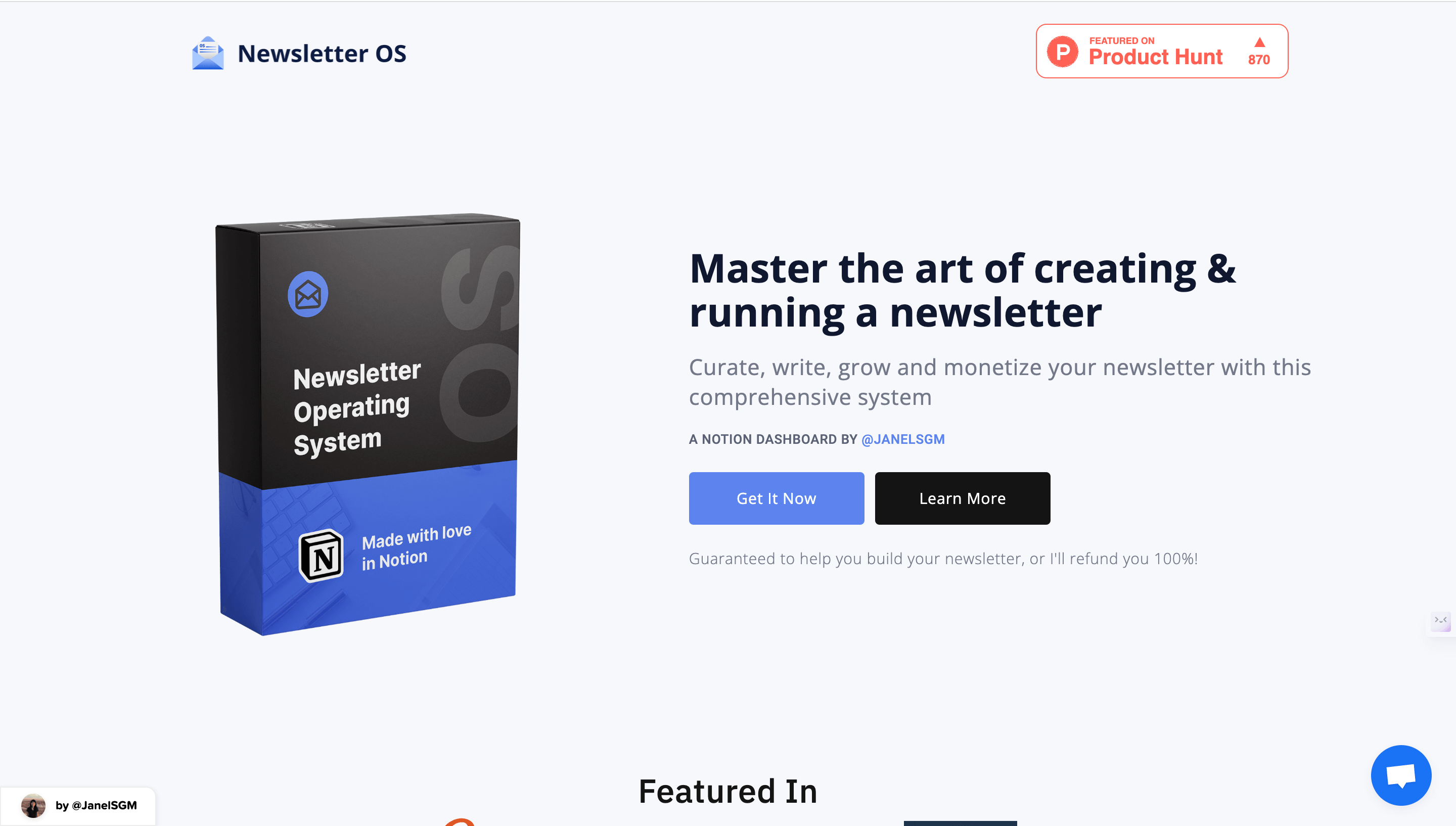
NewsletterOS sells a Notion-based system for planning and writing newsletters. The site is a masterclass in single-page selling: one clear promise up top, proof and features in the middle, purchase at the bottom. No navigation to wander off into, because there's nowhere else to go.
Steal this: the page mirrors the buying conversation in order. That's not a Carrd trick, it's a structure you can copy on any platform.
2. Better Sheets: an education business on a one-pager
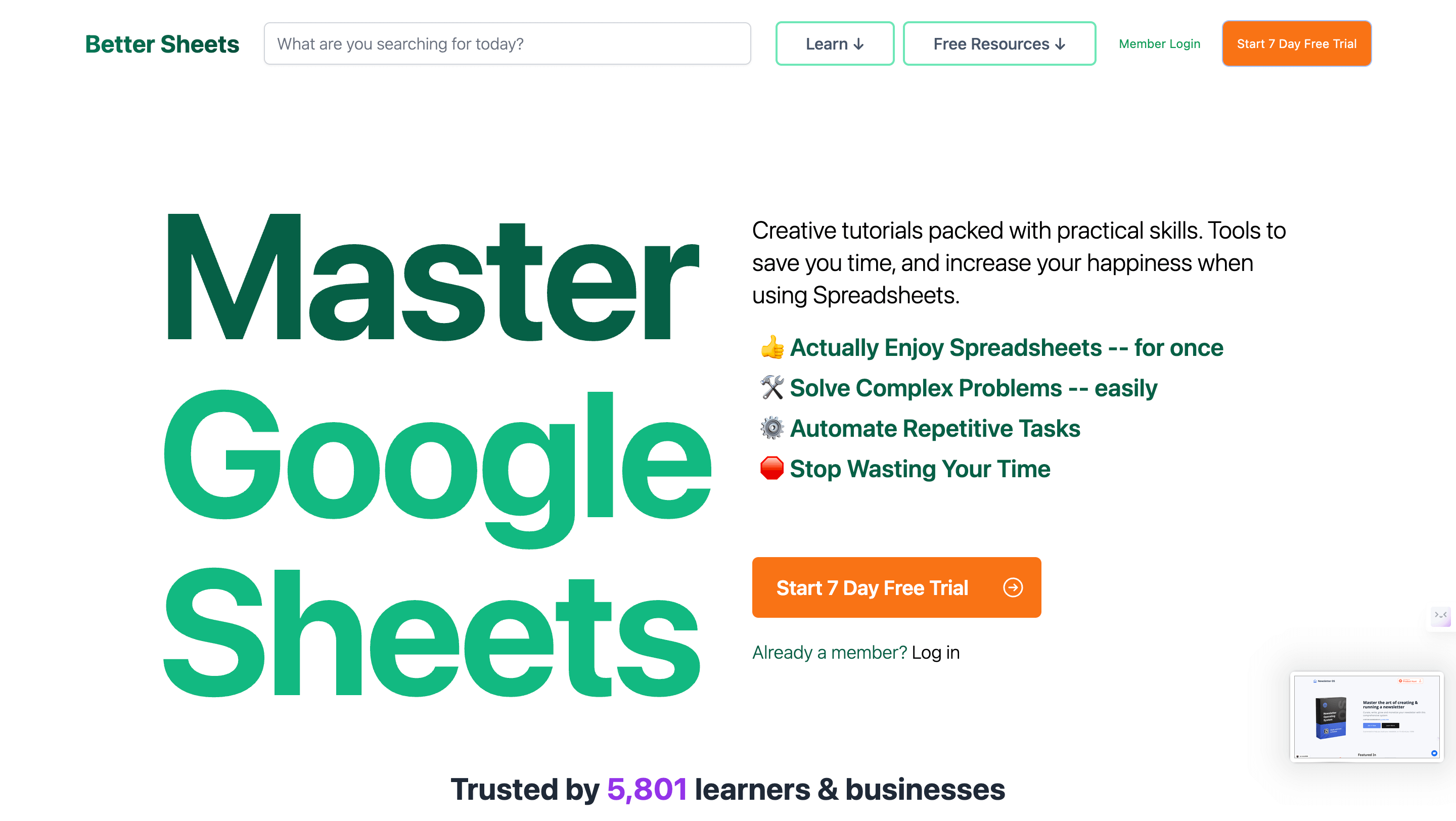
Better Sheets teaches Google Sheets through hundreds of tutorials, and the Carrd site carries a real paid-education business. It proves a point: your platform doesn't cap your revenue, your offer does.
Steal this: the sheer specificity. "Learn Google Sheets" is a sharper promise than most agency homepages manage with ten times the budget.
3. Plaand: a job board front door
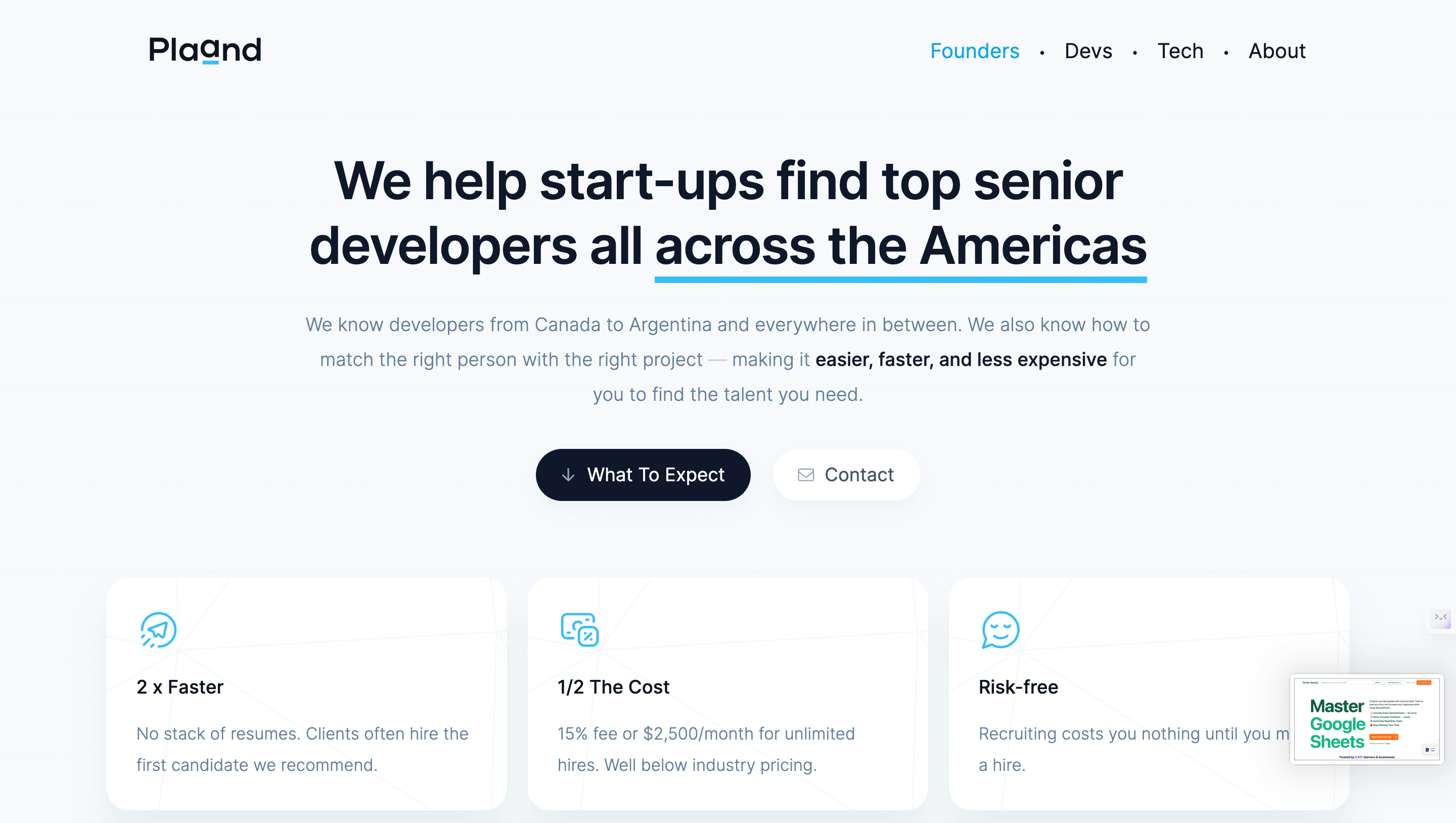
Plaand connects remote job seekers and recruiters. The Carrd page acts as the clean, fast front door, with the heavier functionality living behind it. That's a smart pattern: let Carrd do the marketing layer and other tools do the work.
Steal this: you don't need your landing page and your product on the same platform.
4. Abstract: a design studio practicing what it preaches
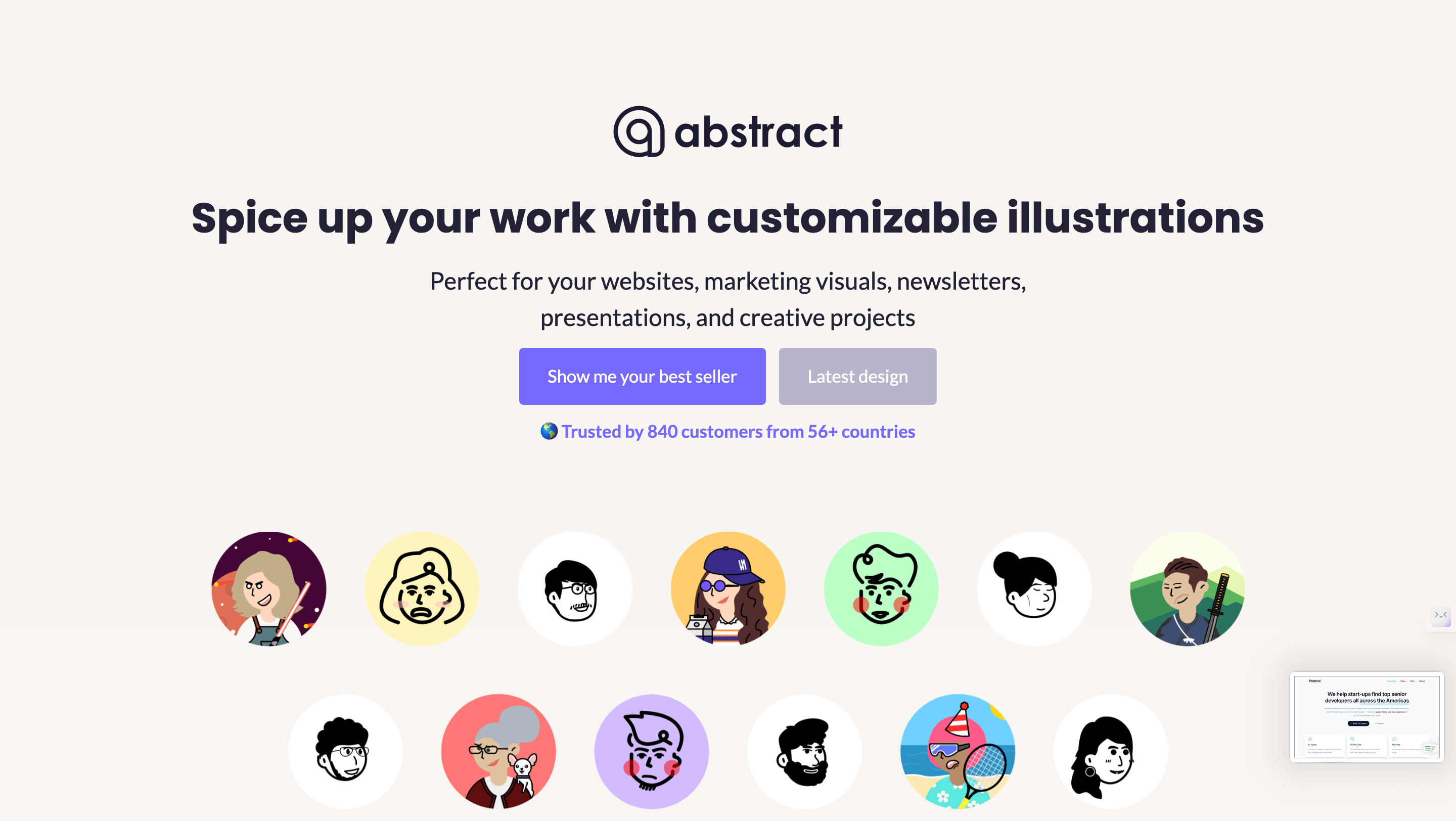
Abstract is a design lab offering custom illustrations for commercial use. An illustration studio choosing a minimal one-pager is the right instinct: the work is the hero, and the layout stays out of its way.
Steal this: when your product is visual, cut everything that competes with it.
5. Really Good Questions: curation as a product
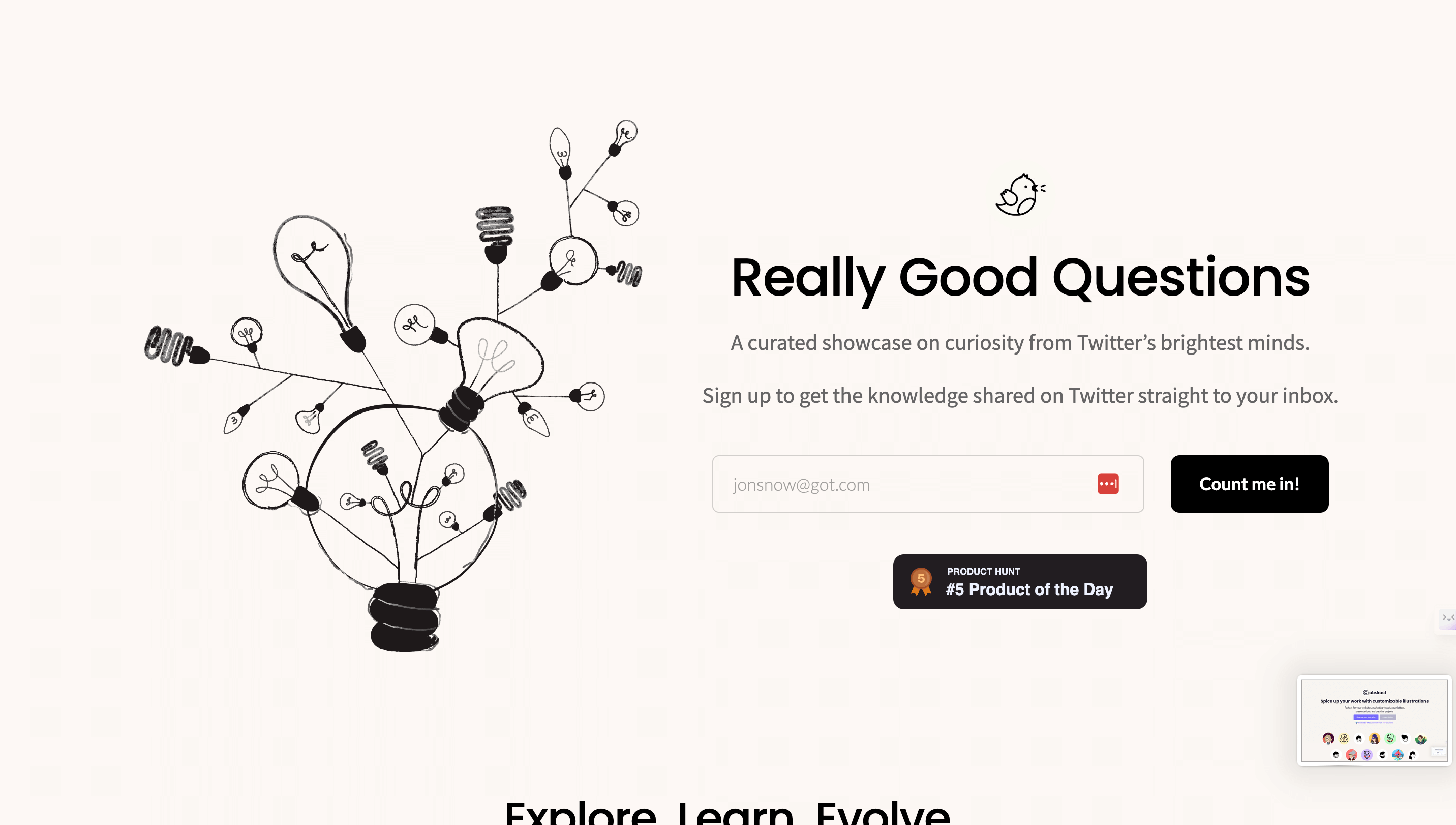
Really Good Questions is a hand-curated library of thought-provoking questions. It's the purest Carrd use case on this list: a simple idea, presented simply, where anything fancier would add friction instead of value.
Steal this: a small, finished thing beats a big, half-built one.
What the five dead sites teach you
The missing half of the original list included a SaaS community, a construction company, a restaurant website service, a yoga studio, and an art portfolio. All gone within a couple of years.
That's not Carrd's fault. It reflects who Carrd attracts: side projects, experiments, and small businesses testing an idea for the price of two coffees a year. The platform makes starting cheap, and cheap starts get abandoned cheaply too.
The takeaway for you: Carrd is a brilliant testing ground. If the idea works and outgrows one page, that's your signal to invest in a proper multi-page build.
When Carrd is the right call, and when it isn't
- Choose Carrd for a landing page, a personal site, a waitlist, a link-in-bio page, or validating an offer before you spend real money.
- Choose a heavier builder like Webflow when you need a CMS, multiple pages, custom animations, SEO at scale, or a site that grows with a content strategy. That's the territory we work in daily; our Webflow development post explains what that unlocks.
FAQ
Is Carrd good for professional websites?
For one-page sites, yes. Better Sheets and NewsletterOS run real businesses on it. Once you need multiple pages, a blog, or a CMS, you've outgrown it.
How much does Carrd cost?
At the time of writing, paid plans run from about $9 to $49 per year, with the popular Pro Standard tier at $19 per year including custom domains and forms. There's also a limited free tier.
Carrd or Webflow: which should you pick?
Carrd for testing an idea or running a simple one-pager. Webflow for a growing business site with a CMS, animations, and SEO structure. Many projects sensibly start on one and graduate to the other.